Vilvoorde, October 1536.
A crowd gathers in the cold air.
A stake is waiting. Wood is stacked. A rope is prepared.
Everything is eerily quiet.
Men move with the steadiness of routine.
One adds another armful of wood to the pile.
Another tests the rope, running it through his hands, checking the knots.
A third checks the stake's lashings and kicks the base to make sure it won't shift.
A fourth lays a cord out neatly – measured, prepared, ordinary.
No shouting. No urgency.
Just the quiet efficiency of a job being done.
And then the last prop is brought onto the stage.
A prisoner.
William Tyndale.
He is offered the final chance to recant.
But he refuses, and the cord is drawn tight around his neck.
A few seconds later, the executioner steps in close.
No fury. No hesitation.
He takes the cord in both hands, leans back, and draws it tight with the emotionless efficiency of a man tightening a harness.
Tyndale pulls hard against the cord – once, then again.
His body spasms, then stills.
Another man crouches at the base of the wood stack, strikes a light, shields it with his palm, and touches flame to kindling as casually as if igniting a hearth.
The fire catches.
It dances, then rises.
In seconds, it's leaping upward, threading through the wood, and swarming over Tyndale's limp body.
And with that, another sinner has been silenced. The State can breathe a sigh of relief, and life can move on.
But what crime did Tyndale commit?
What could be so heinous that he was sent so gruesomely to the hereafter?
Was it a violent act of murder?
Was it the betrayal of a nation?
Was it theft, corruption, or some predatory act against the innocent?
No.
His 'crime' was translating the Bible into English, so common men and women could read it for themselves.
It seems ludicrous, and yet this is what dogma can do. It can turn devotion, the sacred, into execution. Execution that, to those in power, feels fully justified.
So why does dogma persist in almost every spiritual tradition across all historical periods? And what can we do to free ourselves from it?
In 19th-century horse artillery, speed and stability were everything. Because cannons were drawn by horses, the drill required a specific soldier (often designated 'Number 6') to stand at the head of the team and hold the horses' bridles.
His function was vital: to steady the animals and keep them from bolting when the cannon fired.
But as the 20th century turned, mechanisation arrived. Trucks and motorised tractors replaced the horses, and 'Number 6' was no longer needed.
And yet for years afterwards, a weird thing happened: 'Number 6' remained in place.
The military rulebook demanded that he take up his position, so there he stayed – even though there was no horse to hold.
The form remained, even though its original purpose had long since disappeared.
And if you look at a lot of 'spiritual' customs and traditions, you'll find something similar.
Tradition has been sanctified, whether or not it still has a purpose, whether or not it is still the optimal way to do things.
A famous saying warns us that 'the map is not the territory'.
In spiritual traditions, that often means we confuse 'form' with essence.
We confuse the spiritual trappings, doctrines, temples, and holy symbols with the substance that they point to.
But ultimately, while teachings can guide you toward truth – they are not truth themselves.
The Buddha talked about the dharma (the teachings) being like a raft.
You use the raft to cross a river to reach an island, but once you are there, it would be ludicrous to pick up the raft and carry it around on your back.
But that is what we so often do.
We use teaching to help us understand aspects of the world, but then we cling to these teachings so tightly that we can never get beyond them.
Think of it like a mantra.
You use a mantra to calm the mind and give it a focal point amid the regular storm of thoughts.
You have thousands of thoughts, and you let your mind rest on a single one: your mantra.
But then, ideally, you reach a place where you let go even of your mantra and float in a kind of nothingness.
In a spaciousness.
In what the Buddhists call 'emptiness'.
But once you reach this space, it would be absurd to keep repeating the mantra.
The mantra has done its job.
It has taken you beyond thought into the vast realm beyond thought. As such, you can let it go.
If we return to our 'map', then we might say that dogma begins when the map is treated as a final destination.
It begins when mentally travelling down the 'correct' paths on the map is more important than traversing the land the map illustrates.
And often, to protect their self-concept or identity, people and institutions cling to the map, to dogma, no matter how much the territory has changed, no matter what new information comes to light, no matter that the map can never be anything more than a 'finger pointing to the moon' (to quote another Zen idea).
Another reason why dogma is so prevalent in our society is that we are seldom taught to truly think for ourselves and question things.
In modern schooling, we are rewarded for reproducing 'model answers', and we are typically punished for creative divergence.
As a result, students learn to regurgitate rather than think.
And this is often something we see in spiritual communities.
Rituals are performed out of duty or obligation. Dogma is recited as if it were law. But there is often no deep understanding of why the beliefs, rites, and spiritual traditions exist.
People follow the form, but have forgotten – or never known – the true purpose or function of what they do.
And once we have followed a routine enough times or recited a certain belief, then we often start treating these customs and beliefs as if they were an ultimate truth – the territory, not the map.
When this happens, we can get trapped in a loop, in a closed circle from which we may never escape.
So how can we liberate ourselves from the allure of rules, rigid beliefs, and form?
How can we avoid the tyranny of dogma?
The answer is not to abandon all 'structure', all rites, rules, and beliefs, but to understand their true purpose.
We need to see them as training wheels, not chains.
For instance, while hand positions and sequences in modalities like Reiki are invaluable for beginners since they help give them a solid healing framework, a template to use that will give them consistent results since they ensure all of a client's critical organs and energy centres are covered in a logical sequence, to follow them blindly will nevertheless always hold a healer back.
Think about it.
Since no two clients are the same, no two healing sessions should ever be the same.
So it makes no sense to deliver the same session with the same positions and timing for every person – no matter how good the positions are 'in general'.
Instead, we should see the hand positions – the 'Reiki rules' – as a starting point, not a law.
They are training wheels that keep our practice steady until we no longer need them, until we discover that, as helpful as they are, if we never let them go, they will ultimately hold us back.
We use them as a foundation for our practice, but then let go of them as we allow ourselves to be guided more holistically. We toss away the 'textbook' to work more holistically.
After that, our hands might move to unexpected places. Or they might stay in one place far longer than 'makes sense'. Or we might simply be guided to work in ways that make no logical sense.
Whatever the case, we let go of the rational mind.
We let Spirit guide us.
And we fly free into the unknown, free from the training wheels that have now fulfilled their role.
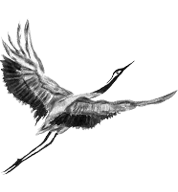
Dogma has many faces, and it can be just as dogmatic to rail against rules as to enforce them at every turn.
Both rules (theory/form) and intuition have their place. We simply need to understand the roles they play.
We need form – but we also need that which lies beyond it.
Without a container, there is formlessness, and especially in the early days of our spiritual practice, this can lead to confusion, uncertainty, and even overwhelm.
What's more, it can lead to a kind of 'identity crisis', because without form, without rules and beliefs and solid things to tell us who we are, what we believe in, and what we practice, we can lose our sense of self.
But unless we allow room for what exists beyond rules, beliefs, dogma, the mind and its concepts, we will not only stagnate, we will also miss out on most of the beauty in life and healing.
We will miss out on intuition, love, and wonder.
We will miss out on the vast realms that exist beyond labels and control.
So we need form for stability.
But we also need to transcend it if we wish to touch the divine spark.
And that, ultimately, is where the true heart of spirituality lies.
(Article by Om Reiki Founder, Jeremy O'Carroll)
Reiki 1 (Melbourne) · Reiki 1 (Brisbane) · Reiki 2 (Melbourne) · Reiki Master (Melbourne) · Daylesford Courses · Meditation Courses · Chi Activation Courses · Pellowah Courses
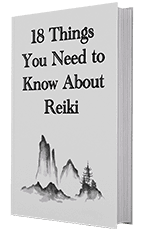
Sign up for our weekly Reiki newsletter and receive '18 Things You Need to Know About Reiki' for free.
If you're looking to take a Reiki course, you need to read this ebook first!
Learn the critical mistakes prospective students make. Ensure you find the course that best suits your needs.
© 2026 Om Reiki Centre. All Rights Reserved.