If you are reading this, there is a good chance that anxiety or stress has become a regular feature of your life. You are certainly not alone. Anxiety disorders affect roughly one in four Australians at some point, and chronic stress has become so normalised that many people barely recognise it anymore.
Over my 18-plus years of teaching and practising Reiki, I have seen countless people walk through our doors weighed down by anxiety, and I have watched time and again as Reiki helped them find a calm and steadiness they had not felt in years. So let me share what I have learned about how Reiki works with anxiety and stress, both from personal experience and from the growing body of research in this area.
Anxiety is exhausting because it does not just live in the mind.
It gets into the breath. The belly. The shoulders. The jaw. The nervous system. The whole energy field starts buzzing as if someone has plugged you into a dodgy power board and walked away.
From an energy perspective, anxiety often feels scattered and ungrounded. Too much energy rushes into the head, feeding the endless loop of thoughts, worries and imaginary disasters. Meanwhile the lower energy centres, especially the base chakra and hara, can feel weak or disconnected.
Reiki helps by bringing energy back into balance. It does not argue with the anxious mind. This is useful, because arguing with the anxious mind is like trying to win a debate with a blender.
Instead, Reiki works underneath the noise. It calms the body, steadies the breath, grounds the energy, and gives the system a chance to remember what safety feels like.
One of the reasons Reiki can be so helpful for anxiety and stress is that it does not require your mind to behave itself.
This is important.
Meditation can be wonderful, but when your head is a whirling jumble of unceasing thoughts, sitting still and watching the breath can feel like being locked in a small room with a hyperactive monkey. Reiki is different. The energy can flow even when your mind is messy.
As Reiki flows, the body often begins to soften. The breath deepens. The nervous system shifts toward rest. The energy that was jammed in the head starts moving through the body again.
Sometimes this feels peaceful straight away. Sometimes it stirs things up first. Old stress, grief, fear or emotional gunk may begin to surface. This is not necessarily a bad sign. As Jeremy often says in Reiki Flow, you can kick a smelly sock under the bed, but it still stinks out the room. Better to let the old gunk come out than leave it quietly draining your energy from the shadows.
Of course, Reiki is not a replacement for medical or psychological care. But as a complementary practice, it can be a remarkably gentle way to calm the system and begin clearing what has been sitting there for too long.
While Reiki research is still a developing field, the evidence for its effects on anxiety and stress is encouraging. Studies and clinical observations repeatedly point to Reiki's ability to create deep relaxation, reduce anxiety, soften the stress response and help people feel more centred.
This matters because anxiety is not just a thought problem. It is a whole-body state. The breath tightens, the belly contracts, the nervous system stays on alert, and the mind begins looping through danger scenarios. Reiki helps by shifting the body toward a calmer parasympathetic state: heart rate slows, breathing deepens, muscles release and the energy begins to settle.
From an energy perspective, anxiety often feels scattered and ungrounded, as if too much energy has rushed into the head and upper body. Reiki brings the system back down, reconnecting people with the body, the breath and the lower energy centres that create steadiness.
Of course, Reiki is not a replacement for medical or psychological care. If you are dealing with serious anxiety, panic attacks, depression or trauma, it is important to get appropriate professional support. Reiki works best as a complementary therapy: gentle, non-invasive, and often profoundly reassuring.
If you have never had Reiki before, here is what a typical anxiety-focused session looks like.
You lie fully clothed on a comfortable treatment table. The room is quiet and warm. Your practitioner places their hands gently on or just above various positions on your body, typically starting at the head and working downward.
Most people begin to feel a sense of warmth or gentle tingling within the first few minutes. As the session progresses, the anxious thoughts that were racing through your mind start to slow down. Your breathing deepens. Your muscles begin to let go of the tension they have been holding.
Some people fall into a state that is somewhere between waking and sleeping: deeply relaxed but still aware. Others experience emotional releases, sometimes a few quiet tears as stored tension moves through. This is entirely normal and is actually a sign that healing is taking place.
A session typically lasts between 60 and 75 minutes. Afterwards, most people describe feeling calm, clear, and noticeably lighter, as if a weight has been lifted.
If you are in Melbourne, you can book a Reiki healing session at our centre.
One of the best things about Reiki is that once you have been attuned, you can use it yourself.
At home. On the tram. Before sleep. After an argument. When your mind is doing its 3am greatest-hits album of every mistake you have ever made.
You simply place your hands on yourself, relax as best you can, and let the Reiki energy flow. You do not need to visualise beams of light shooting out of your crown chakra. You do not need to strain. You do not need to become a spiritual superhero in stretchy pants.
Just let go and let flow.
Used regularly, self-Reiki becomes a way of changing your base energetic state. You are not just trying to feel better for ten minutes. You are gradually teaching the body and energy field a different pattern: calmer, more grounded, more resilient, less easily thrown around by every passing stress.
That is why learning Reiki can be so valuable for people with anxiety. A session is lovely. But having a tool you can use for the rest of your life is better.
If anxiety or stress has been weighing you down, Reiki offers a path forward that is gentle, non-invasive, and profoundly effective. You do not need to believe in it for it to work. You just need to be open to the experience.
There are two ways to begin. You can book a healing session to experience Reiki firsthand, or you can learn Reiki yourself so that you have a lifelong tool for managing stress and supporting your wellbeing.
Either way, you are taking a step toward something better. And in my experience, that first step is often the most important one.
Reiki 1 (Melbourne) · Reiki 1 (Brisbane) · Reiki 2 (Melbourne) · Reiki Master (Melbourne) · Daylesford Courses · Meditation Courses · Chi Activation Courses · Pellowah Courses


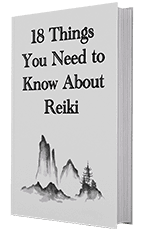
Sign up for our weekly Reiki newsletter and receive '18 Things You Need to Know About Reiki' for free.
If you're looking to take a Reiki course, you need to read this ebook first!
Learn the critical mistakes prospective students make. Ensure you find the course that best suits your needs.
© 2026 Om Reiki Centre. All Rights Reserved.