With so many Reiki courses available across Australia, it can be genuinely difficult to know which one is right for you. Prices vary wildly, course lengths differ, and every provider claims to offer the best training.
Having taught Reiki for over 19 years and trained more than 350 Reiki Masters, I have seen how transformative the right course can be and how disappointing the wrong one can leave you feeling. So here is a practical guide to help you make a well-informed decision.
Before you book anything, it is worth stepping back and considering what actually makes a quality Reiki course. At the most fundamental level, you want training that will give you genuine confidence in your ability to channel Reiki energy, not just a certificate to hang on the wall.
A good Reiki course should include a strong theoretical foundation, plenty of hands-on practice, properly conducted attunements (or initiations), and a teacher who is genuinely experienced rather than someone who completed their own training a few months ago and decided to start teaching.
Ask yourself: does the course give you enough time to absorb what you are learning? A weekend format is standard for Reiki Level 1, but be cautious of courses crammed into a single day. Reiki needs time to integrate. Rushing through the material helps no one.
Reiki has a clear lineage system. The energy and teachings are passed from Master to student in an unbroken chain stretching back to Mikao Usui, the founder of the Usui system. When choosing a course, it is perfectly reasonable to ask your prospective teacher about their lineage.
A reputable teacher will be happy to share this information. They should be able to tell you who taught them, who taught their teacher, and so on back to the source. If a teacher is vague about their lineage or dismisses the question, that is worth noting.
It also matters whether your teacher has trained in Japan or studied directly under Japanese Reiki Masters, because much of Reiki's depth comes from its original Japanese roots. Many Western Reiki courses have stripped away key elements over the decades, so understanding where your teacher's knowledge comes from can make a real difference to the quality of your training.
This is one of those factors people often overlook. A Reiki course with 30 students in the room is a very different experience to one with 10 or 12.
In a smaller group, your teacher can actually observe your technique, answer your questions properly, and give you individual guidance during the attunement process. In a large group, you are essentially receiving a lecture with a brief attunement tacked on.
When you are learning to feel and channel energy for the first time, personal attention is not a luxury. It is essential. So before enrolling, ask about typical class sizes. A good teacher will keep numbers manageable because they understand that quality matters more than revenue.
Here is something many people do not think about until it is too late: what happens after the course ends?
Reiki is a practice, which means the real learning begins once you start using it in your daily life. Questions will come up. You might feel uncertain about your technique. You might want guidance on how to develop your sensitivity further.
The best Reiki schools offer ongoing support, whether that is through practice groups, video portals, follow-up sessions, or simply being available to answer questions by phone or email. If a school takes your money on the weekend and then you never hear from them again, that should tell you something about their commitment to your development.
At Om Reiki Centre, for instance, we offer comprehensive post-course support including practice nights, video portals for revision, and direct access to your teacher. We believe the relationship does not end when the course does.
If you are specifically comparing local options, you may also find our guide How to Choose a Reiki Course in Victoria helpful.
This has become a bigger question since 2020, and it is worth addressing directly. While online Reiki courses exist, and some provide useful theoretical content, Reiki is fundamentally an experiential practice.
The attunement process, the feeling of energy flowing between your hands and another person, the group energy that builds in a room full of people learning together: these things cannot be fully replicated through a screen.
If you have the option to learn in person, I would always recommend it for your foundational levels. Once you have established a solid practice and can feel the energy reliably, online resources can be a valuable supplement. But for your initial training, there is no substitute for being in the room.
Reiki courses in Australia range from under $200 to over $600 for Level 1. So what accounts for the difference?
Generally speaking, a lower price usually means a larger class, a shorter course, fewer materials, and less ongoing support. That is not always the case, but it is the pattern. A rock-bottom price might look attractive, but if the training leaves you feeling uncertain and unsupported, you have not really saved anything.
Equally, the most expensive course is not automatically the best. What you want is genuine value: a well-structured course taught by an experienced teacher in a group small enough for personal attention, with proper materials and ongoing support.
At Om Reiki Centre, our Melbourne Reiki Level 1 course is $490. That includes two full days of training, a comprehensive manual, post-course support, access to practice groups, and video portals for ongoing revision. We have found that this price point allows us to keep class sizes small and quality high.
Over the years, I have heard enough stories from students who trained elsewhere first to compile a short list of warning signs:
Unrealistically short courses. If someone is offering Reiki Master training in a single weekend with no prior experience required, be very cautious. Mastery takes time and commitment.
No clear lineage. As mentioned above, a reluctance to discuss lineage is a concern.
Extravagant claims. Reiki is a powerful healing modality, but any teacher who guarantees miracle cures or claims Reiki will fix every problem in your life is not being honest with you.
No ongoing support. A certificate and a wave goodbye is not enough. Your teacher should be invested in your continued development.
Pressure to advance quickly. Some schools push students to move rapidly through the levels because each level means another course fee. A responsible teacher will encourage you to practise and consolidate before moving on.
Choosing a Reiki course is a personal decision, and there is no single right answer for everyone. But if you approach it with clear eyes, ask the right questions, and trust your instincts, you will find the training that is right for you.
Here is a simple checklist to guide you:
Does the teacher have a clear, traceable lineage?
Is the class size small enough for personal attention?
Is the course long enough to properly cover the material?
Is there genuine ongoing support after the course?
Does the price reflect the value of what is offered?
Does the teacher have substantial experience, both in practising and teaching Reiki?
If you can answer yes to all of these, you are likely looking at a quality course.
We have been training Reiki practitioners in Melbourne, Brisbane, and Daylesford for nearly two decades, and we have been honoured to receive GHP's award for Best Victorian and NSW Reiki Centre twice, as well as Most Authentic Reiki Training Company in 2026. But more than any award, what matters most to us is that our students leave feeling confident, supported, and genuinely connected to the energy.
If you would like to learn more about what we offer, visit our course page or read what our students have to say on our testimonials page. You can also read Best Reiki Course in Victoria for a more Victoria-specific comparison, or our guides on what happens in a Reiki course and the differences between Reiki levels. And if you have any questions at all, feel free to get in touch. We are always happy to have a chat.
(Article by Jeremy O'Carroll)
Reiki 1 (Melbourne) · Reiki 1 (Brisbane) · Reiki 2 (Melbourne) · Reiki Master (Melbourne) · Daylesford Courses · Meditation Courses · Chi Activation Courses · Pellowah Courses




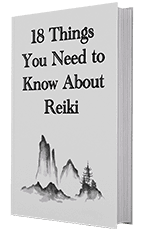
Sign up for our weekly Reiki newsletter and receive '18 Things You Need to Know About Reiki' for free.
If you're looking to take a Reiki course, you need to read this ebook first!
Learn the critical mistakes prospective students make. Ensure you find the course that best suits your needs.
© 2026 Om Reiki Centre. All Rights Reserved.