Reiki Level 1, traditionally called Shoden, is the entry point into Reiki. But I don’t think of it as a little “starter course” that you rush through before getting to the exciting bits. Level 1 is where the foundation stones are laid. Get them right, and everything that follows becomes easier. Rush them, and you often end up having to come back and fill in the gaps later.
In my view, a good Reiki 1 course should do more than give you a certificate. It should help you feel Reiki as something concrete and experiential. By the end of the first day, you should not be left wondering whether anything happened. You should have some real sense of the energy flowing and enough practical confidence to begin using it for yourself and others.
That is why our Reiki 1 course in Melbourne is taught over two full days in Fitzroy North. There is a lot to cover: attunements, self-healing, healing others, precepts, meditations, grounding, hand positions, scanning, how to speak to people you are healing, and how to keep practising after the weekend. Try to squeeze all that into a few rushed hours and something important almost always gets lost.
The first thing you learn is that Reiki is not an abstract idea. It is something you can experience. As I explain in The Perfect Reiki Course, Reiki is about learning to connect to ki – life-force energy – in a very concrete way. The point is not to believe in Reiki because someone tells you to. The point is to feel it, practise with it, and discover what it does for you.
This is one reason Reiki is so useful for beginners. Unlike meditation, it can still work even when your mind is noisy. You do not need to sit there like a perfect monk with no thoughts. If your head is full of shopping lists, worries, and random nonsense, Reiki can still flow. Bit by bit, it tends to calm and settle you anyway.
A central part of Reiki Level 1 is the attunement process. An attunement is a kind of energy ceremony in which the teacher helps “tune you in” to Reiki energy. The radio-station analogy is still the best simple explanation: once your system knows the frequency, it becomes much easier to reconnect.
The attunement is not creating something from nothing. It is activating a natural healing capacity that was already there, even if it was dormant. In Reiki Flow, I describe this as strengthening the crown and palm chakras and attuning us to the Reiki healing frequency, so that healing with the hands becomes accessible.
Different people experience attunements differently. Some feel heat, tingling, light, emotion, stillness, or a deep sense of peace. Others feel very little at the time and notice the changes later. There is no prize for having the most dramatic experience. The real test is what happens when you practise.
Traditional Japanese Reiki is broader than “put your hands here and wait”. In my books I describe five core components of the system:
In Level 1, you are not expected to master all of this in a weekend. That would be absurd. But you should be introduced to the foundations properly so that you know what to practise and why it matters.
The main emphasis in Reiki 1 should be self-healing. This is not selfish. It is sensible. If your own energy system is clearer, stronger, and more settled, you will naturally be in a better position to help others.
You learn a simple self-treatment sequence, but more importantly you learn how to use Reiki as a daily practice. This might mean giving yourself Reiki before sleep, using it when stressed, working with the precepts, or practising a meditation such as breathing into the hara.
One of the most important post-course practices I recommend is self-healing with the basic hand positions. Not because the hand positions are magical in themselves, but because they give you a reliable structure. Later, intuition can lead. At the beginning, structure is your friend.
One thing I value strongly – and that is often missing from superficial Reiki training – is grounding. In Traditional Japanese Reiki, this means learning to connect to the hara, the key energy centre below the navel.
The hara is your energetic foundation. Strengthen it and you become less easily knocked around by other people’s moods, dramas, and scattered energy. I often describe it as putting down a deeper root system. The energetic winds can still blow, but you hold your space more easily.
This is especially practical for sensitive people, healers, therapists, nurses, teachers, parents – really anyone who mixes with other human beings. Which, inconveniently, is most of us.
Although self-healing comes first, Level 1 should also make you comfortable giving Reiki to others. You learn how to begin and end a session, where to place your hands, how to stay centred, and how to let Reiki do the work instead of trying to force a result.
This is where in-person practice matters. Reading about Reiki is helpful. Feeling it flow through your hands while another person receives it is different. You learn by doing. You also learn by receiving Reiki from other students, because then you discover what it feels like from the other side of the table.
As I say in Reiki Flow, less is often more with Reiki. You do not need to visualise beams of light, strain, perform, or do fancy-schmancy spiritual gymnastics. Stay relaxed. Stay present. Let the energy flow.
Reiki hand positions are useful. They work on the body’s main energy centres, organs, and common areas of imbalance. They also give beginners a clear map, which is reassuring when you are still learning.
But hand positions should not become a prison. In The Perfect Reiki Course, I describe them as a backup plan for when clear intuitive guidance is lacking. In other words, intuition trumps the hand positions – but when you are not sure where to go, return to the structure.
That balance matters. Too much structure and Reiki becomes mechanical. Too little structure and beginners can feel lost. A good Reiki 1 course gives you both.
Level 1 should also introduce you to energy awareness. This includes scanning – learning to sense where someone may need more Reiki – and sweeping, which helps smooth the aura and make a person more receptive.
Do not worry if you are not wildly psychic on day one. Most people develop sensitivity through practice. Some feel heat, tingling, pressure, pulsing, or heaviness. Some simply get a quiet sense that one area needs more time. Again, the aim is not to show off. The aim is to become useful.
This is a part of Reiki training that is easy to underestimate. When you work with people, what you say matters. One careless sentence can frighten someone, make them obsess about a problem, or cause them to misinterpret an energetic sensation as something dramatic.
So Level 1 should include the basics of how to speak to people you are healing: how to be supportive without making claims, how to avoid diagnosing, how to stay humble, and how to remember that Reiki supports healing rather than replacing medical care.
That last point is important. Reiki can be wonderful, but we do not need to turn it into snake oil. Keep it grounded. Keep it honest. Let the results speak for themselves.
A Reiki 1 weekend is a beginning, not the finish line. The real change often happens afterwards, through regular practice. That is why we include post-course support, a 21-day follow-up program, video resources, and practice opportunities for students.
If I had to name three things to focus on after Reiki 1, they would be:
Practise these and your Reiki will deepen. Ignore them and you may still have a nice certificate, but you will miss much of the value.
After Reiki 1, most students practise on themselves, family, friends, pets, or plants. Some simply want Reiki for self-care and spiritual growth. Others eventually move on to Reiki Level 2, where they learn the Reiki symbols, distance healing, and deeper mental-emotional work.
If your long-term goal is professional practice, Level 1 is the beginning of the pathway. You will usually want Reiki 2, regular practice, mentoring, insurance, and possibly Reiki Master Level if you feel called to teach.
Om Reiki Centre teaches Reiki Level 1 in Fitzroy North, Melbourne, with a grounded, practical approach that draws on Traditional Japanese Reiki, Western Reiki, hands-on practice, meditations, attunements, hara work, scanning, self-healing, post-course support, and years of teaching experience.
You can see current dates and enrolment options on our Melbourne Reiki 1 course page. If you are still comparing options, you may also find our guide on how to choose a Reiki course in Australia useful.
(Article by Jeremy O'Carroll)
Reiki 1 (Melbourne) · Reiki 1 (Brisbane) · Reiki 2 (Melbourne) · Reiki Master (Melbourne) · Daylesford Courses · Meditation Courses · Chi Activation Courses · Pellowah Courses



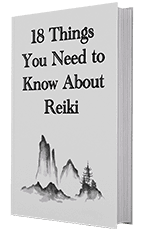
Sign up for our weekly Reiki newsletter and receive '18 Things You Need to Know About Reiki' for free.
If you're looking to take a Reiki course, you need to read this ebook first!
Learn the critical mistakes prospective students make. Ensure you find the course that best suits your needs.
© 2026 Om Reiki Centre. All Rights Reserved.